Strategy
It's easy to assume that more activity leads to more growth. Another social media post. A redesigned website. A new advertising campaign. Professional photography. Video production. Each investment seems perfectly logical on its own. After all, every competitor is doing these things, and every consultant recommends them. So why wouldn't stacking them together produce results?
The answer lies in the difference between assembling parts and building a machine. A collection of marketing tactics, no matter how well-executed individually, will never outperform a coordinated strategy where every element reinforces the others. Without the connective tissue of strategy, your marketing becomes a series of disconnected experiments rather than a compounding growth engine.
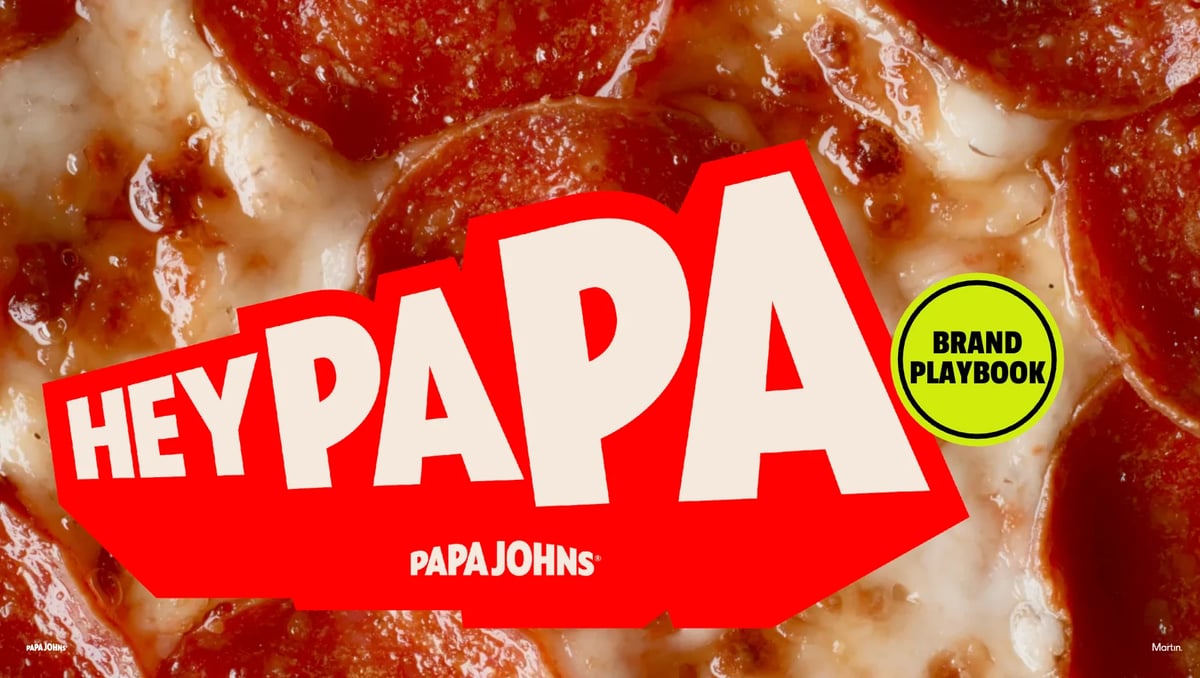
We've seen this firsthand. When Papa John's came to us, they had "Better Ingredients. Better Pizza" — a genuine operational commitment. But years of leadership transitions had fragmented the brand voice across franchisees, corporate, and consumers. The brand was respected, not loved. The solution wasn't another campaign. It was a comprehensive brand playbook that unified the entire organization behind four strategic pillars: Brand, Culture, Social, and Campaign Strategy. The result? One brand voice across thousands of locations, from national TV to TikTok.
Each investment seems logical on its own. The website redesign promises better conversion rates. The social media campaign promises broader reach. The video production promises deeper engagement. The paid advertising promises immediate traffic. But stacked together without a unifying strategy, they often work against each other. One message on the website, a different tone on social media, a third identity in advertising — and suddenly, your audience doesn't know who you are.
The problem is that none of them answer the most important question: What is the overall strategy?
Marketing strategy isn't about choosing colors or deciding what to post this week. It's not about picking the right hashtag or scheduling content at the optimal time. Those are tactics — important ones, certainly — but tactics nonetheless. Strategy is the architecture beneath them. It's about defining where the business is going, who it's trying to reach, what makes it genuinely different, and how every single marketing investment — from a business card to a Super Bowl commercial — supports those foundational goals.
Without strategy, every new marketing project becomes another expense instead of another step toward growth. The distinction is critical. An expense is a cost you hope pays off. A strategic investment is a cost you've already calculated will pay off because you understand exactly how it fits into your larger growth plan. The difference between the two is the difference between gambling and investing — and businesses that treat marketing like gambling rarely beat the house.
Then there's Cedars-Sinai — one of America's most prestigious hospital systems. Their challenge wasn't a lack of visibility. It was that the brand meant something different to every department, every doctor, every patient. We built a 3-year brand playbook anchored in "We See You" — recognizing patients as whole people, not just diagnoses. The platform unified communications across 40+ clinical departments, from national TV to the exam room. Same lesson: strategy first, then everything else falls into place.
The hidden costs begin to appear quickly, and they compound silently. Teams duplicate work because no one shares the same vision of what success looks like. Vendors create messaging that doesn't connect across channels, leaving customers confused about what your brand actually stands for. Advertising sends traffic to websites that don't convert because the promise in the ad doesn't match the experience on the landing page. Content attracts the wrong audience — people who will never become customers — because the content was created to fill a calendar rather than serve a specific strategic purpose.
And then leadership begins questioning whether marketing works at all. Budgets get cut. Teams get restructured. Agencies get fired. The very function meant to drive growth becomes viewed as a cost center, something to minimize rather than maximize. It's a painful and entirely preventable cycle.
The irony is that marketing wasn't the problem. The lack of strategy was. Marketing is one of the most powerful growth levers available to any business — but only when it has a clear strategic foundation. Without that foundation, even the most talented marketers and the biggest budgets will struggle to produce consistent, predictable results.
Businesses with a clear strategy make faster decisions because every opportunity is filtered through the same lens. A new platform emerges — does this support our positioning? A partnership opportunity arises — does this help us reach our ideal customer? A vendor pitches a flashy new service — does this move the business closer to its goals? When those answers become clear, the noise fades. Marketing becomes more focused, more efficient, and significantly more profitable.
Strategic clarity doesn't just improve decision-making — it transforms the entire marketing function. Teams spend less time debating and more time executing. Budgets are allocated with confidence rather than anxiety. Creative work improves because it's guided by clear parameters rather than vague aspirations. And perhaps most importantly, results become measurable against actual strategic objectives rather than vanity metrics that look good in reports but don't move the business forward.
At Jacob Strategy Group, strategy isn't a document that sits in a folder collecting dust. It's not a one-time exercise conducted at an annual retreat and promptly forgotten. It's the living blueprint behind every website, campaign, video, advertisement, and customer experience we create. We believe that strategy isn't the boring part of marketing — it's the part that makes everything else work.
Because when strategy leads, everything else begins working together. The website becomes a conversion engine, not just a digital brochure. Social media becomes a community-building platform, not just a content calendar. Advertising becomes a precision instrument, not just a spending machine. Content becomes a magnet for ideal customers, not just search engine fodder. Photography and video become storytelling tools that reinforce your differentiation, not just visual assets that look nice.
The businesses that win aren't the ones that spend the most on marketing. They're the ones that spend the smartest. And smart spending starts with strategy. The question isn't whether your business can afford to invest in strategy — it's whether you can afford not to.
Ready to build marketing that actually works together? Let's talk.